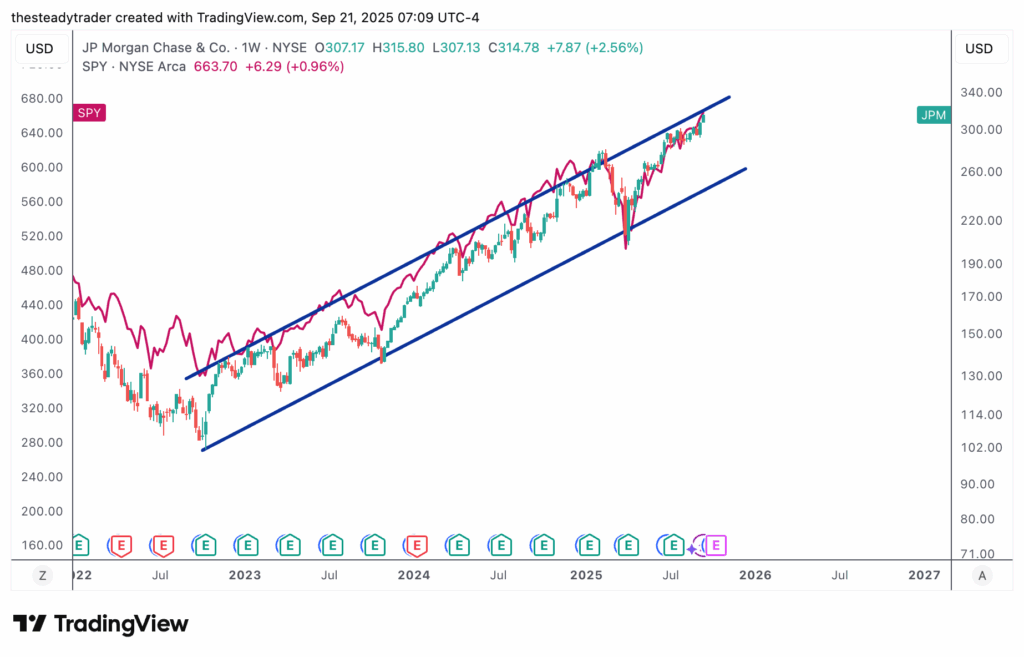
ost retirement accounts, like 401(k)s and IRAs, have significant exposure to the financial sector, primarily through broad-market index funds that track indices like the S&P 500. As of late 2025, the financial sector constituted about 14% of the S&P 500, making it one of the largest sector weightings. This exposure, however, comes with a unique set of risks. The profitability of banks and other financial institutions is highly sensitive to changes in interest rates and credit quality. This makes the financial sector highly cyclical, meaning its performance is closely tied to the broader economic cycle. Investors should be aware that while a strong economy can fuel growth for these companies, an economic downturn could lead to increased volatility and a negative impact on their portfolios.
The financial sector’s recent performance has been notable, with some of the largest banking stocks like JPMorgan Chase and Citigroup experiencing substantial rallies over the past couple of years. From the end of 2023 through mid-2025, Citigroup’s average stock price saw a significant percentage increase, reflecting a period of strong performance. However, this has led to increased concerns about their valuations. Analysts and market observers have noted that many financial stocks, including major banks, appear overvalued based on traditional metrics. The current economic environment, marked by a softening labor market and potential shifts in monetary policy, introduces a new layer of uncertainty. This could lead to more volatile times ahead for these stocks, as their prices are susceptible to fluctuations in interest rate expectations and changes in the economic outlook.
Citigroup (Ticker: C) is currently trading 30% above its 200 day moving average. This has not happened much in the past and usually leads to a mean-reversion move lower in C shares.